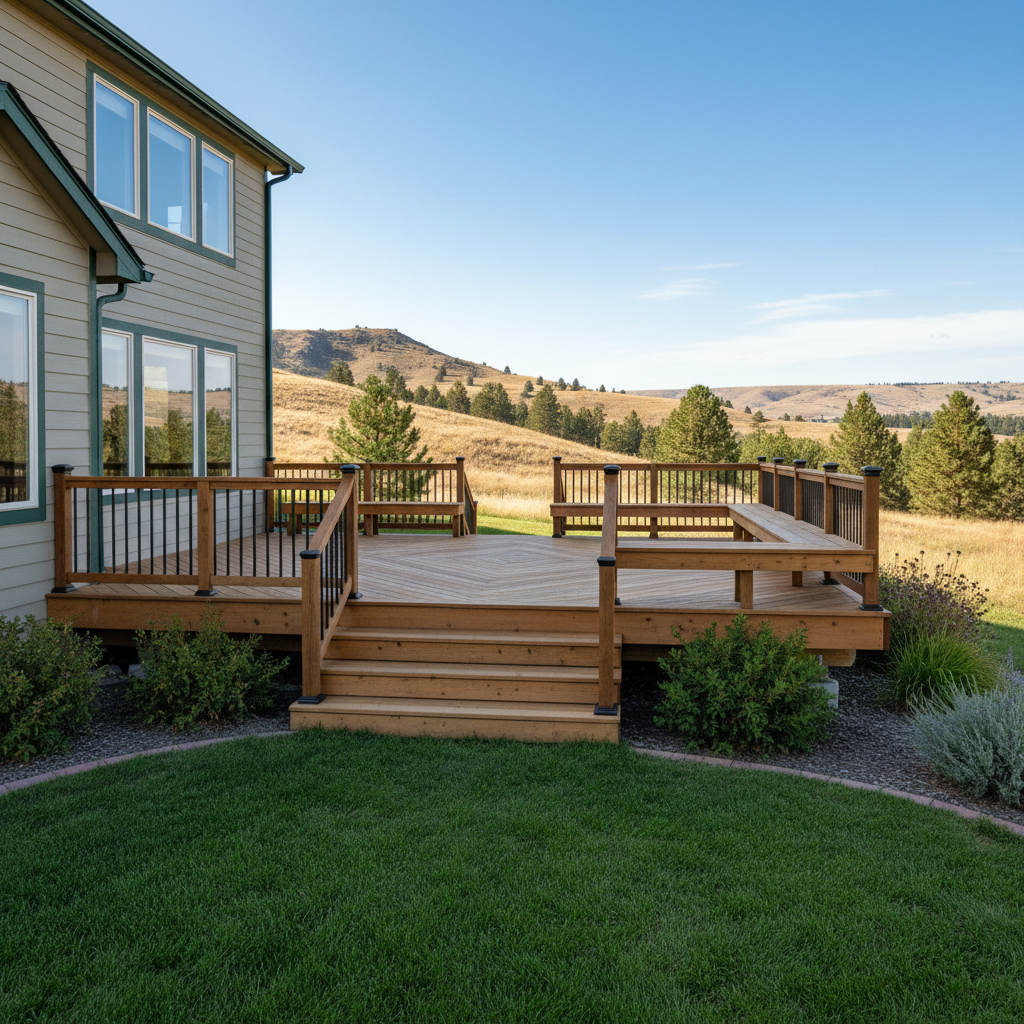
Alright, let's get straight to it. You're looking at a new deck for your Boise home, and you want to know what it's actually going to cost. Forget those online calculators that give you some wild, generic number. I'm a local guy, I build decks, and I know what you'll pay here in the Treasure Valley.
What Makes Deck Prices Go Up (or Down)?
A deck isn't just a flat platform. There are a bunch of things that change the price tag, and it's not always obvious. Here's what I look at when I'm putting together a quote:
- Size and Shape: This is a no-brainer. A bigger deck costs more in materials and labor. But also, a complex shape with lots of angles, curves, or multiple levels will cost more than a simple rectangle. More cuts, more framing, more time.
- Decking Material: This is probably the biggest variable. Pressure-treated lumber is the cheapest option. Composite decking (like Trex or AZEK) is more expensive upfront but lasts longer and needs way less maintenance. Hardwoods like cedar or redwood sit somewhere in the middle, offering a natural look but requiring regular sealing.
- Foundation and Footings: Here in Boise, especially with our clay soils in some areas, proper footings are critical. We're talking concrete piers, sometimes dug down three or four feet to get below the frost line. If your yard has a slope, or if we hit rock, that adds to the labor and sometimes the equipment needed.
- Railing Type: A basic pressure-treated wood railing is the most economical. Aluminum balusters with wood rails are a popular upgrade. Then you've got full aluminum, composite, or even glass panel railings, which can really bump up the cost. Glass looks great but it's pricey.
- Height and Access: A ground-level deck is simpler. A second-story deck needs more complex framing, taller posts, and often a more robust stairway. If we can't get a mini-excavator into your backyard easily, or if we're hauling everything by hand, that's more labor.
- Permits and Plans: Any deck over 30 inches off the ground or attached to your house requires a permit from the City of Boise. This means engineering plans, inspections, and fees. Don't skip this; it's for your safety and resale value.
- Add-ons: Built-in benches, planters, pergolas, lighting, or a fancy staircase with landings – these are all custom features that add to the final price.
Typical Deck Cost Ranges in Boise
Okay, let's talk numbers. These are general ranges for a standard, attached deck, not a detached platform or a tiny landing.
- Basic Pressure-Treated Wood Deck: For a simple, rectangular deck, you're usually looking at $35 - $55 per square foot. So, a 200 sq ft deck might be $7,000 - $11,000. This includes basic wood railing and standard footings.
- Mid-Range Composite Deck: If you want a good quality composite deck with matching composite railings, expect to pay $55 - $85+ per square foot. A 200 sq ft composite deck could run $11,000 - $17,000 or more, depending on the specific composite brand and railing style.
- Premium Composite or Hardwood Deck with Features: For top-tier composite, exotic hardwoods, multi-level designs, aluminum or glass railings, built-in features, and lighting, you could be looking at $85 - $120+ per square foot. A 200 sq ft deck in this category might easily hit $17,000 - $24,000+.
These ranges include materials, labor, permits, and typical site prep. Remember, these are estimates. Every project is unique.
What Should Be in Your Deck Quote?
When Boise Deck Creations gives you a quote, or any reputable contractor for that matter, here's what you should expect to see:
- Detailed Material List: Specific types of lumber, decking, railing components, fasteners, and concrete.
- Scope of Work: A clear description of what's being built, including dimensions, height, and any special features.
- Permit and Engineering Costs: Who's responsible for getting them and if they're included in the price.
- Demolition and Haul-Away: If an old deck needs to go, make sure it's covered.
- Labor Costs: Sometimes itemized, sometimes rolled into the total.
- Payment Schedule: Typically a deposit, progress payments, and a final payment upon completion.
- Warranty Information: What's covered and for how long.
- Timeline: An estimated start and completion date.
How to Avoid Overpaying for Your Deck
Getting a good deal doesn't mean finding the absolute cheapest guy. It means getting good value for your money. Here's how:
- Get Multiple Quotes: Three quotes from reputable, licensed, and insured contractors is a good number. Don't just compare the bottom line; compare what's included.
- Be Specific About What You Want: The more details you can give upfront, the more accurate the quote will be. Show them pictures, draw a sketch, tell them your priorities.
- Ask About Experience: How long have they been building decks? Can they show you examples of their work?
- Check References: Talk to past clients. See if they were happy with the communication, quality, and timeline.
- Understand the Contract: Read everything before you sign. Ask questions about anything you don't understand.
- Don't Rush: A good deck is an investment. Take your time choosing the right contractor and design.
Building a deck is a big project, but it adds a ton of value and enjoyment to your home. Do your homework, ask the right questions, and you'll end up with a great outdoor space you'll love for years.