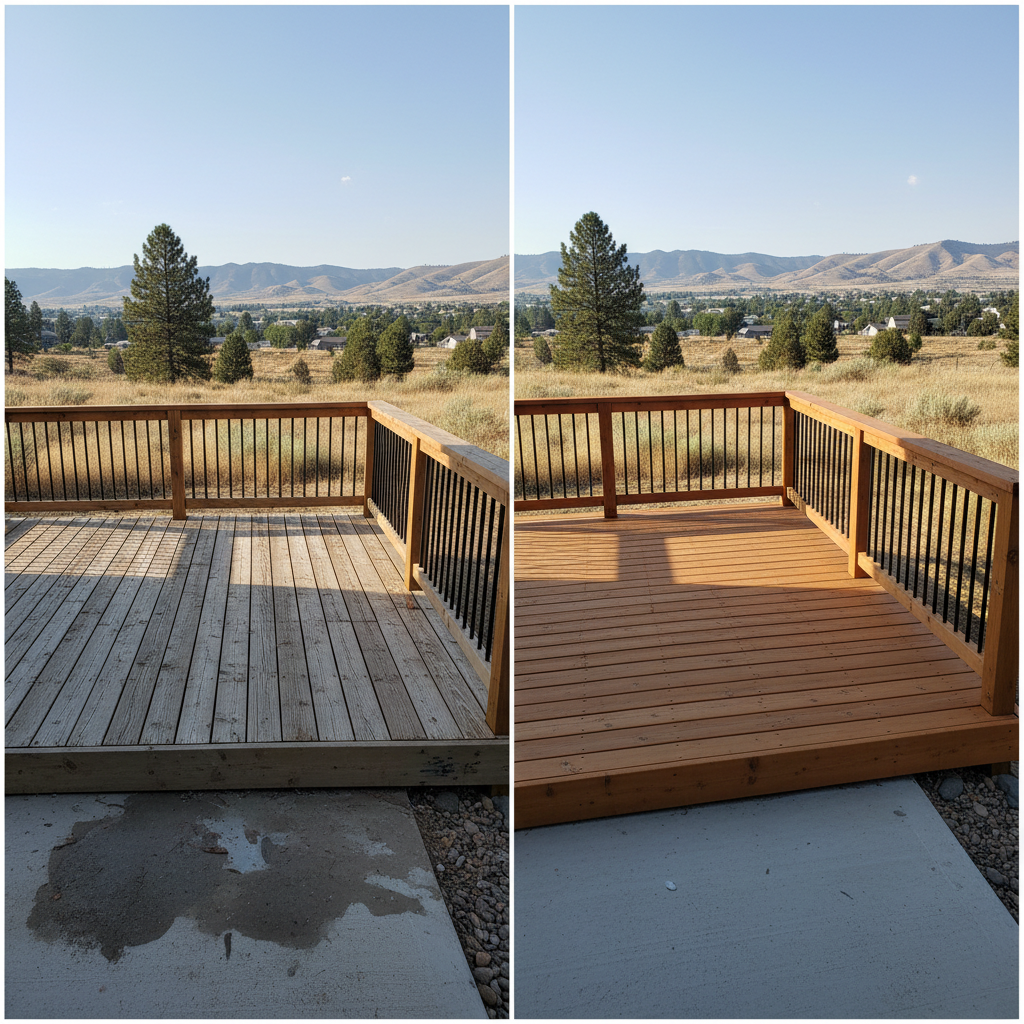
Your deck's seen better days, huh? Maybe a few rotten boards, some splintering, or just an overall worn-out look. When that happens, you've got a decision to make: do you just fix the worst parts, or do you go for a bigger refresh? Here in Boise, especially with our hot summers and snowy winters, I see a lot of folks wrestling with this. Let's talk about patching individual boards versus doing a full deck resurface, keeping your existing frame.
Patching Individual Deck Boards
This is exactly what it sounds like. You find the specific boards that are rotted, cracked, or just plain dangerous, and you replace only those. It's the 'spot treatment' approach to deck repair.
Cost
Generally, this is your cheapest option right away. You're buying less material – just a few boards, maybe some new fasteners. Labor costs are lower too, since it's a quicker job. If you're handy, you might even tackle a few boards yourself, saving on labor entirely. But don't forget the cost of matching materials, which can sometimes be tricky.
Durability
The durability of this approach is a mixed bag. The new boards will be strong, sure, but the surrounding older boards are still, well, old. If the rot was caused by a consistent issue like poor drainage or constant shade, those new boards might start failing sooner than you'd like. You're only as strong as your weakest link, and if you've got a bunch of weak links still out there, you'll be doing this again in a few years.
Maintenance
Maintenance doesn't really change for the whole deck. You'll still need to clean and potentially stain or seal the entire surface regularly. The patched areas might need specific attention to blend them in. And you'll likely be keeping an eye out for the next board that decides to give up the ghost.
Appearance
This is where patching often falls short. Unless your deck is brand new and you're replacing a damaged board with an identical one, you're going to see the patches. New wood rarely matches old, weathered wood, especially if it's a different species or from a different batch. Stains might help, but it's tough to get a seamless look. It'll scream 'repair' rather than 'refresh'.
Full Deck Resurface (Keeping the Frame)
This option means we're taking off all the old deck boards, railings, and sometimes even the stairs, but we're keeping the existing structural frame underneath. We'll inspect that frame thoroughly, make any necessary repairs or reinforcements, and then install all-new decking material.
Cost
This is a bigger investment upfront than just patching. You're buying all new decking material for the entire surface. Labor costs will be higher because it's a much more involved process – demolition, frame inspection, and then a full new installation. However, it's significantly less expensive than building an entirely new deck from scratch, since the most expensive part (the foundation and framing) is reused.
Durability
This is where resurfacing really shines. By replacing the entire surface, you're essentially getting a brand-new deck top. If you choose a durable material like composite or a high-quality treated lumber, you're looking at decades of reliable use. We always inspect the frame for issues like rot or settling, common in areas like the North End where older homes might have original decks, ensuring the whole structure is sound before putting new material on top.
Maintenance
With a full resurface, especially if you opt for composite decking, your maintenance drops dramatically. No more annual staining or sealing. Just a good cleaning a couple of times a year. Even with new wood, you're starting fresh, so your routine will be more effective and less about trying to rescue old, tired boards.
Appearance
A full resurface gives you a completely fresh look. You can choose a new color, a different material, or even change the board pattern. It looks like a brand-new deck, because for all intents and purposes, the visible part is. This significantly boosts your home's curb appeal and enjoyment.
My Recommendation for Boise Homeowners
Look, if you've got one or two isolated bad boards on an otherwise solid, relatively new deck, patching is a perfectly fine, cost-effective solution. Maybe a grill fell on a board, or a single spot got water damage. Go for it.
But for most decks in Boise that are showing widespread wear, rot, or just look plain old – especially those 10+ years old – I'm going to tell you to seriously consider a full resurface. It's a better long-term investment. You get a far more durable, much lower-maintenance, and significantly better-looking deck. You're not just kicking the can down the road; you're solving the problem for good.
Think about it: our weather here in the Treasure Valley is tough on decks. We go from freezing snow and ice to 100-degree dry heat. That expansion and contraction, plus the moisture cycles, really take a toll. Patching just delays the inevitable and leaves you with a deck that still looks patched. A full resurface, especially with a quality material from Boise Deck Creations, gives you a deck that feels new, looks new, and will stand up to our Idaho seasons for years to come. It’s a smarter use of your money in the long run.